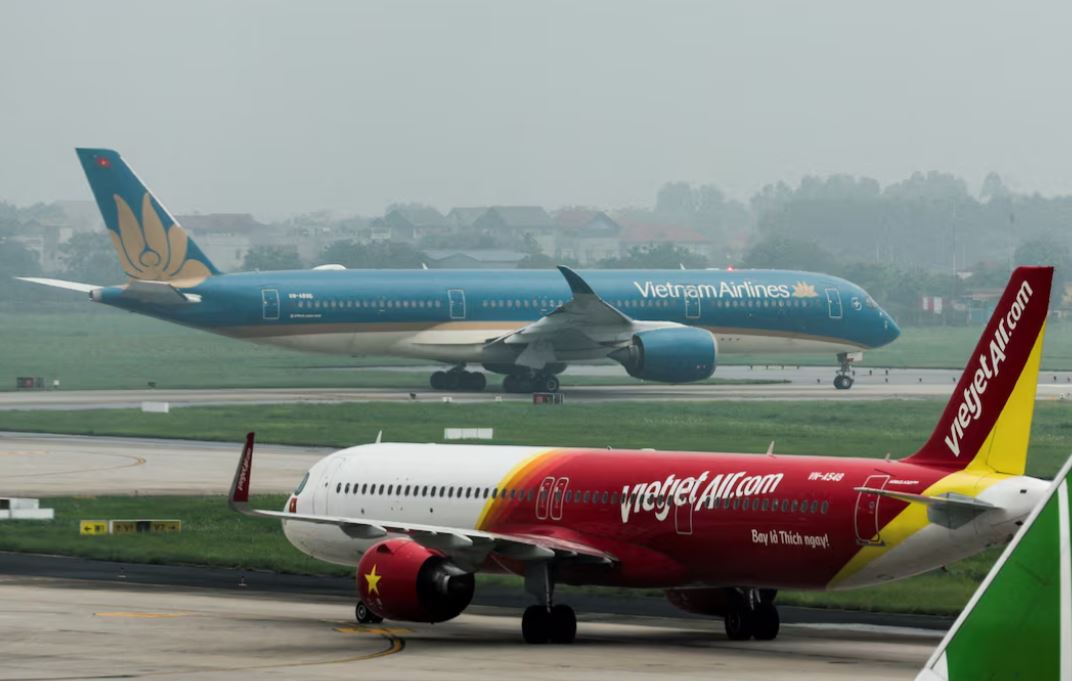
Vietnam’s aviation sector is bracing for potential flight cuts from April 2026 after China and Thailand halted jet fuel exports, leaving carriers scrambling for alternative supplies and raising the prospect of higher ticket prices for passengers.
Vietnam imports more than 70% of its jet fuel, with roughly 60% sourced from China and Thailand. After China urged its refiners not to agree to new exports early this month and later imposed a hard ban on refined fuel exports from March 11, supplies have tightened sharply. LinkedIn Thailand has also imposed restrictions on certain petrochemical product exports, further limiting Vietnam’s options.
Major fuel suppliers Skypec and Petrolimex Aviation have indicated that current supply is only sufficient to meet airline demand until the end of March under existing contracts, with partners in Singapore, Thailand and China delaying deliveries and potentially invoking force majeure clauses.
The price shock has been severe. Jet A1 aviation fuel prices escalated from approximately $60 per barrel before the conflict to near $200 per barrel by early March 2026. Vietnam’s Civil Aviation Authority has acknowledged that overall airline costs have jumped 60 to 70 percent since the conflict began, driven almost entirely by fuel.
For passengers, higher fares are already materializing. On the Hanoi to Da Nang route, Vietnam Airlines round-trip fares ranged from approximately 3 to 5 million VND in April, higher than the same period last year. Vietjet fares for the same route were commonly between 2.5 and 4.5 million VND.
To cushion the blow, the Civil Aviation Authority of Vietnam has proposed a 100% exemption of the environmental protection tax on aviation fuel until end of May 2026, a VAT reduction on jet fuel, and a flexible fuel surcharge mechanism on domestic tickets linked to actual fuel price movements. Vietnam’s aviation authority has also recommended seeking alternative suppliers, citing South Korea, Japan, Brunei and India as potential sources, while acknowledging that finding new suppliers in the current market is difficult.