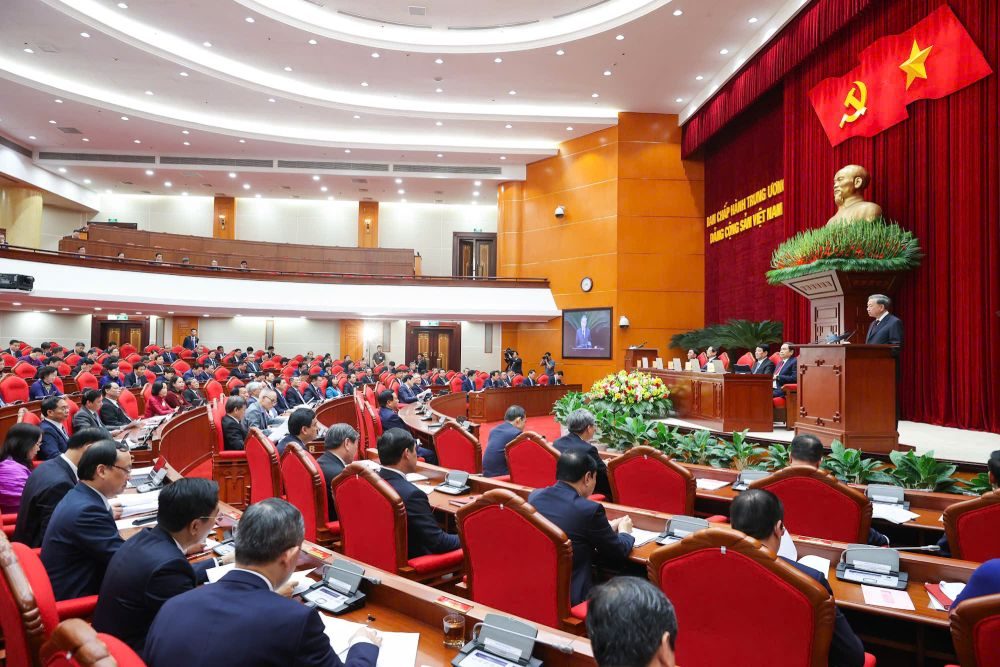
Vietnam’s Communist Party has introduced new rules prohibiting party members from using the ongoing government restructuring to place loyalists or unqualified individuals in key positions with authority over public resources.
The provision is part of Regulation No. 207, issued on 26/07/2026, replacing a previous code of conduct adopted in 2021. The new rules were announced on 29/07 by Tran Sy Thanh, Chairman of the Party’s Central Inspection Commission, during a conference on Party discipline.
The regulation comes as Vietnam is carrying out one of its largest administrative reforms in decades, merging government agencies and reorganizing local administrations to streamline the public sector.
Under the new rules, party members are prohibited from exploiting the restructuring process to appoint associates, relatives or individuals lacking the necessary competence and credibility to positions responsible for allocating public resources.
The regulation also tightens anti-corruption requirements. Party members are banned from using their positions to benefit themselves or their relatives, interfering in official decisions for personal gain, or failing to report and address corruption and misconduct when they become aware of it.
Another notable provision targets the allocation of state resources. Officials are forbidden from designing procurement criteria or administrative requirements that unfairly favor specific companies, organizations or individuals.
The new rules also address bureaucratic inefficiency by prohibiting delays, avoidance of responsibility, harassment in administrative procedures and poor implementation of official decisions.
For the first time, the regulation explicitly covers misconduct in the digital sphere. Party members are barred from creating or spreading false information online, including content generated with artificial intelligence, as well as disclosing confidential Party or state information.
According to Vietnamese authorities, the updated regulation is intended to strengthen Party discipline, improve transparency during the government’s restructuring process and reinforce anti-corruption efforts.